 Spend by Product Exec
A thousand cardholders, one audit trail.
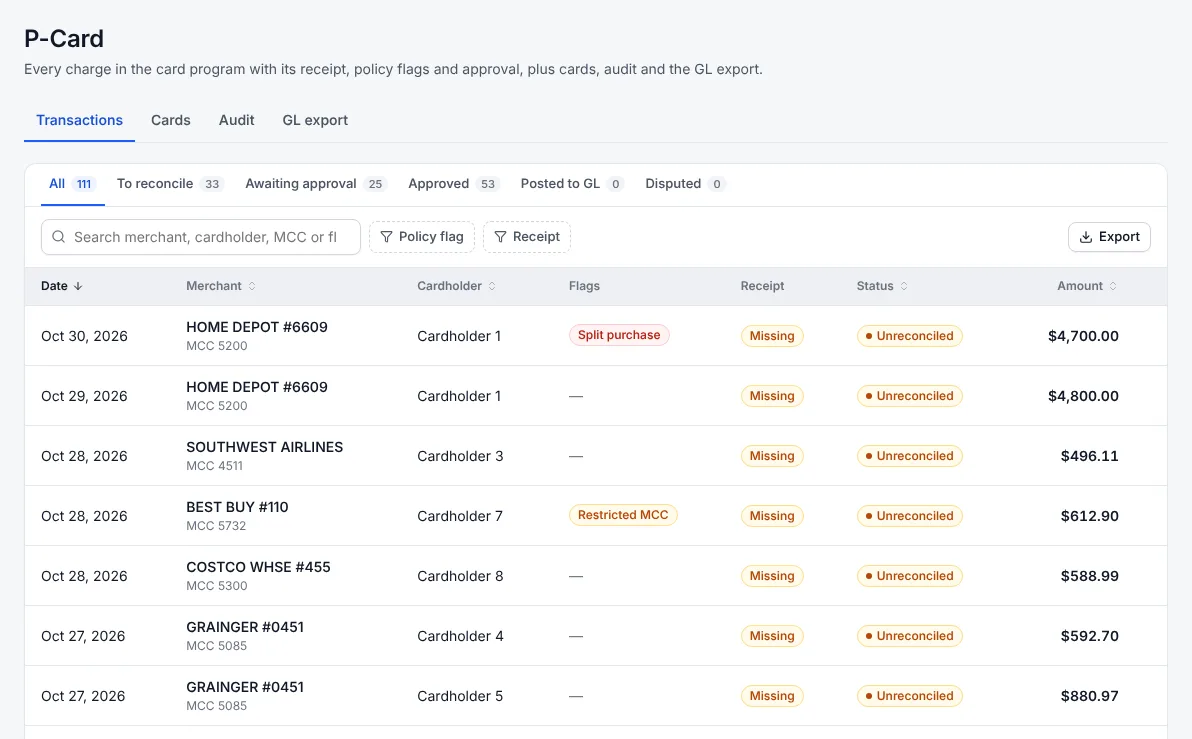
Bank feeds, receipts, rules, approvals, reconciliation, the audit sample and the GL journal for the whole purchasing card program. Split purchases, blocked and restricted merchant categories and missing receipts are caught as charges arrive.
Bank files in, level 3 detail
Visa VCF 4.4 and Mastercard CDF3 files (or a CSV export) with line items, merchant location and tax. A file whose trailers do not agree is rejected whole.
Rules on every charge
Split-purchase windows, blocked and restricted MCCs, single-purchase and monthly limits and receipt thresholds, from the policy pack.
Audit that scales
Charges are sampled for audit and the P-Card review agent checks each one against the receipt, purpose, coding and the cardholder's history.
P-Card review
P-Card review
Audits sampled card charges against the receipt, purpose, coding and policy; asks cardholders for what is missing and proposes the audit result and any suspension for the program coordinator.
P-Card coordinator decide
What p-card does
Receipts
Cardholders attach receipts; Spend reads merchant, date, total, tax and card digits and compares them with the charge.
Approver review
Approvers see each charge with its receipt, flags and coding, and can return or approve it.
Missing-receipt affidavits
Cardholders who lost a receipt file an affidavit, recorded on the charge.
Cards and exceptions
Card limits, allowed MCC exceptions and raised limits per card, with suspensions proposed by the agent and decided by the coordinator.
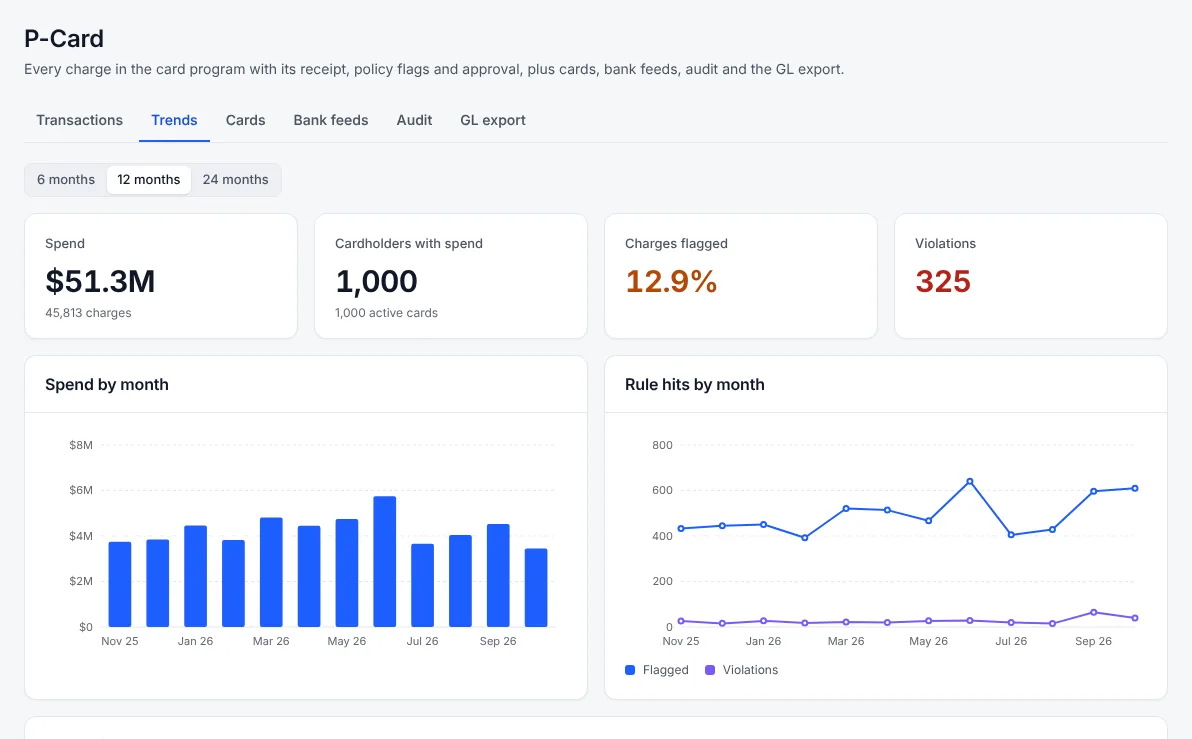
Trends
Spend, cardholders, flagged charges and violations by month across the program.
GL export
Approved charges become a GL journal for Workday or your ERP.
A closer look
Jobs it takes off your plate
Audit the P-Card program
Flag splits and blocked merchants as charges arrive and let an agent audit the sample against receipts.
See it on your own invoices
We run a bake-off on a sample of your real invoices and connect to a sandbox of your ERP, so you can judge the results before you sign anything.